
Northwestern University is a prominent private research university with a distinctive combination of rigorous academics, interdisciplinary research, creative expression, professional education, and an unusually rich connection to both a college-town environment and a major global city. Located in Evanston, Illinois, immediately north of Chicago, Northwestern also maintains a major Chicago campus and an international campus in Doha, Qatar. The university describes itself as a comprehensive research institution with 12 schools and colleges and a strong emphasis on collaboration across disciplines.
For students considering university, Northwestern can be especially interesting because it offers breadth without requiring students to remain confined to one academic area. Its undergraduate environment spans arts and sciences, communication, engineering, journalism, education, music, and other fields, while graduate and professional education extends into areas such as business, law, medicine, education, and advanced research. Northwestern also uses a quarter-based academic calendar, giving students opportunities to explore a broad range of courses during their undergraduate years.
Research is another defining feature. Northwestern reports more than 90 school-based centers and 20 university research centers, with work extending across neuroscience, nanotechnology, biotechnology, drug discovery, sustainability, artificial intelligence, social sciences, and the arts. The university emphasizes interdisciplinary collaboration as a way of addressing complicated real-world problems.
Beyond classrooms and laboratories, Northwestern offers an active student experience. Hundreds of student organizations, athletics, performing arts, campus events, and opportunities in nearby Chicago give students many ways to build friendships and develop interests outside their majors.
This article explores Northwestern University in depth, including its history, academic opportunities, research culture, student life, location, innovation, career preparation, and the qualities that make the university distinctive. 🌎💡
The History and Evolution of Northwestern University 📜🏛️
Northwestern University’s history reaches back to the nineteenth century. The university was incorporated in 1851, and its founders purchased a large tract of land along Lake Michigan in 1853 for the institution’s campus. The surrounding community eventually became Evanston, named after university founder John Evans. Northwestern began classes in 1855 with a very small faculty and student body.
The university’s growth reflected broader changes in American higher education.
During the nineteenth and twentieth centuries, Northwestern expanded beyond its original liberal arts focus by establishing professional schools and developing graduate education. Its academic structure eventually grew to include fields such as law, medicine, management, engineering, education, journalism, communication, and other professional disciplines.
The establishment of the Graduate School in the early twentieth century reinforced Northwestern’s research mission. The university increasingly emphasized graduate education and original research alongside undergraduate teaching. This combination became a central part of Northwestern’s identity.
Today, the institution describes itself as a comprehensive research university with a multidimensional academic community. Its campuses in Evanston, Chicago, and Doha reflect its expansion from a regional institution into a university with an international footprint.
The historical development of Northwestern is important because it helps explain the university’s current character.
Rather than focusing exclusively on one professional area, Northwestern developed a broad academic ecosystem. Students can study subjects ranging from literature and music to engineering, economics, journalism, medicine, data science, and public policy.
That diversity creates opportunities for students to connect ideas.
A communication student might become interested in technology. An engineer might explore entrepreneurship. A biology student might collaborate with data scientists. A journalism student might study political science or computer science.
This culture of crossing boundaries is one of the most recognizable aspects of the modern Northwestern experience. 💜

Academic Excellence and Interdisciplinary Learning 🎓📚
Northwestern offers a broad range of academic programs through its schools and colleges. The university currently identifies 12 schools and colleges, with undergraduate and graduate opportunities spread across multiple disciplines.
One of the most important undergraduate divisions is the Weinberg College of Arts and Sciences. As Northwestern’s oldest and largest school, Weinberg offers programs across the humanities, natural sciences, mathematics, social sciences, fine arts, and interdisciplinary subjects.
The School of Communication provides opportunities to explore communication, theater, performance studies, and related areas.
The School of Education and Social Policy examines learning, human development, organizational change, teaching, and social policy.
For students interested in engineering and technology, the McCormick School of Engineering provides opportunities to study areas such as computer science, biomedical engineering, mechanical engineering, electrical engineering, chemical engineering, and related disciplines.
Medill, Northwestern’s journalism and integrated marketing communications school, is another distinctive part of the university. It connects communication, journalism, media, marketing, and digital technologies.
The Bienen School of Music provides an environment for students interested in performance, composition, music education, and related musical disciplines.
Other schools extend Northwestern’s academic offerings into business, law, medicine, graduate education, and professional studies.
This breadth allows students to customize their educational experience.
Northwestern reports that a large majority of its undergraduates combine multiple areas of study, illustrating the university’s emphasis on academic flexibility.
That flexibility can be valuable because career paths are becoming increasingly interdisciplinary.
Modern industries often require people who understand more than one subject.
A technology company may need professionals who understand both computer science and communication. Healthcare organizations need people who can connect medicine with data, management, engineering, or policy. Media companies increasingly combine journalism with technology and analytics.
Interdisciplinary education prepares students to make these connections.
Instead of asking students to choose between apparently unrelated interests, Northwestern’s academic environment can encourage them to explore how those interests intersect. 🧠✨
The Northwestern Quarter System ⏰📖
One feature prospective students often consider is Northwestern’s quarter system.
The university describes its academic calendar as a flexible quarter system that allows students to engage in a wide range of studies.
Compared with a traditional semester structure, quarters can provide students with opportunities to take more courses across an academic year.
This can be particularly attractive for students with broad interests.
A student might explore a subject outside their major for one quarter and then move into another area during a later term.
The system can also encourage focused learning because courses move at a relatively quick pace.
However, the quarter system requires organization.
Students need to keep track of assignments, exams, projects, and deadlines that can arrive quickly.
Time management therefore becomes an important skill.
Students who learn to plan their weeks carefully can make the most of the academic flexibility.
The quarter system can also support experimentation.
A student interested in economics might take a course in theater. A computer science student might explore philosophy. A journalism student might study data analytics.
These experiences can reveal interests that were not obvious before university.
Education is not only about completing requirements.
It is also about discovering what questions you want to spend your time answering.
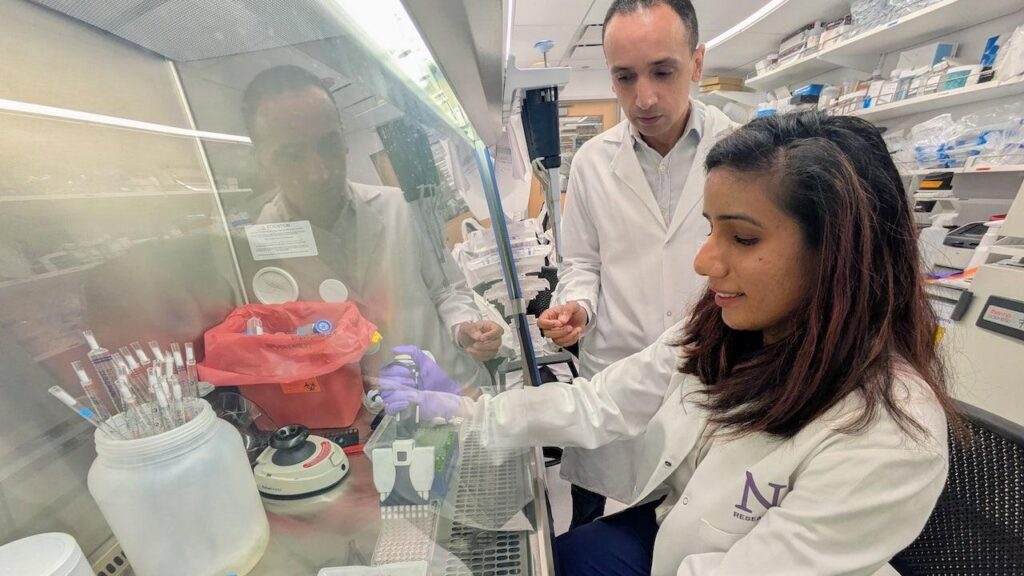
Research at Northwestern 🔬🧪
Research is at the heart of Northwestern’s identity.
The university describes its research environment as deeply interdisciplinary, with faculty, students, and partners working across disciplines to address major questions and develop practical solutions.
Northwestern’s research areas include medicine, engineering, artificial intelligence, neuroscience, nanotechnology, biotechnology, energy, sustainability, social sciences, policy, and the arts.
The university reports dozens of research centers and institutes that bring researchers together around particular themes.
This structure encourages collaboration.
Complex problems rarely fit neatly inside one academic department.
For example, developing a new medical technology might require knowledge of biology, materials science, engineering, computer science, and clinical medicine.
Addressing climate change may involve environmental science, economics, engineering, policy, and social science.
Artificial intelligence can influence fields ranging from medicine and business to the humanities and creative arts.
Interdisciplinary research allows specialists to contribute their own expertise while learning from other disciplines.
Undergraduate students can also participate in this research culture.
Northwestern’s Office of Undergraduate Research supports students interested in research and creative projects, including opportunities for independent work and funding.
This can be especially valuable for students considering graduate school or research-intensive careers.
Research experience teaches skills that are difficult to develop entirely through conventional coursework.
Students learn how to formulate questions, review evidence, work with data, conduct experiments, communicate findings, and respond when results do not match expectations.
These skills are useful well beyond scientific careers.
A student researching history learns archival methods. A journalism student learns investigative techniques. A social scientist analyzes data. An artist develops and critiques creative work.
Research is ultimately a process of disciplined curiosity. 🔍💡
Engineering, Technology, and Artificial Intelligence 🤖⚙️
Northwestern has significant activity in engineering, computing, data science, and emerging technologies.
The McCormick School of Engineering provides students with opportunities to study technical subjects while engaging with broader questions about society and innovation.
Artificial intelligence and data analytics are among the areas identified by Northwestern as institutional priorities. The university emphasizes the use of data and AI across STEM, arts, and humanities disciplines.
This broad approach is important because AI is not simply a computer science topic.
Artificial intelligence is influencing healthcare, finance, education, communication, manufacturing, transportation, entertainment, scientific research, and public policy.
Understanding AI therefore requires both technical knowledge and awareness of human consequences.
Northwestern’s interdisciplinary culture can provide opportunities to study these connections.
An engineering student might develop an AI system.
A communication student might examine how people interact with AI.
A social scientist might study its impact on employment.
A journalist might investigate algorithmic decision-making.
A philosopher might explore questions involving responsibility and ethics.
An entrepreneur might develop a new AI-enabled product.
The most important innovations may occur when these perspectives interact.
Technology is most valuable when it solves meaningful problems.
That means engineers need to understand users, researchers need to understand society, and business leaders need to understand technical possibilities.
Interdisciplinary education can help create that shared understanding. 💻🌎
Journalism, Communication, and Creative Expression 📰🎭🎵
Northwestern is also notable for its strengths in journalism, communication, theater, music, and other creative disciplines.
This gives the university a distinctive balance.
A student can encounter advanced scientific research while also participating in performance, journalism, artistic production, or creative writing.
The School of Communication provides academic opportunities related to communication and human interaction, including theater and performance studies.
Medill contributes a strong journalism and media identity.
In an era dominated by social media, digital platforms, artificial intelligence, and rapidly changing information environments, journalism education has become increasingly connected with technology.
Modern journalists need to understand data, digital storytelling, multimedia production, audience behavior, verification, and the ethical responsibilities of publishing information.
Northwestern’s location near Chicago provides an additional advantage for students interested in media.
Chicago is a major cultural and professional center with newspapers, television organizations, advertising agencies, technology companies, nonprofit institutions, theaters, museums, and creative industries.
The Bienen School of Music adds another dimension.
Northwestern notes the significant achievements of Bienen faculty and alumni in the music world, while its campus also hosts performances and exhibitions.
This combination of technical and creative education can encourage students to develop both analytical and expressive skills.
Creativity is increasingly valuable across professional fields.
Engineers need to design. Scientists need to communicate. Entrepreneurs need to tell stories. Researchers need to present ideas.
A university environment that values creativity can therefore benefit students in many disciplines. 🎨🎶
Campus Life in Evanston 🌊🏫
Northwestern’s primary undergraduate campus is located in Evanston, Illinois, on the shore of Lake Michigan.
The setting offers an unusual combination of natural beauty, college-town atmosphere, and proximity to Chicago.
Northwestern describes its campus as approximately 240 acres, with access to both the lakefront and nearby urban environments.
The lakefront setting can be an important part of daily student life.
Students can walk around campus, study in libraries, meet friends, attend events, participate in recreation, or simply spend time outdoors.
Evanston itself offers restaurants, shops, coffeehouses, theaters, galleries, beaches, and other activities.
The combination can make university life feel both energetic and manageable.
Students have access to a traditional campus community while remaining close to one of the largest cities in the United States.
The campus also provides a wide range of academic and social facilities.
Northwestern’s libraries contain millions of volumes and serve as important centers for study and research. Campus venues support performances, exhibitions, lectures, and other events.
The physical environment matters because students spend years living and learning in these spaces.
A good campus can encourage spontaneous interactions.
A student might meet a friend while walking along the lake, discover a new club through a campus event, or attend a lecture simply because it sounds interesting.
These unplanned experiences can become important parts of university life. 🌅💜
Student Organizations and Community 🤝🎉
Northwestern provides hundreds of student organizations and clubs covering academic, cultural, professional, recreational, artistic, civic, and social interests.
The university reports more than 400 student organizations through its campus-experience resources.
This variety means students can find communities connected to their interests.
Someone interested in theater can join a performance group.
A student interested in entrepreneurship can participate in innovation activities.
Students can join cultural organizations, publications, debate groups, service organizations, sports clubs, music ensembles, professional groups, or recreational activities.
Student organizations also provide leadership opportunities.
Running a club requires communication, planning, budgeting, teamwork, and problem-solving.
These experiences can complement academic learning.
They also help students meet people outside their majors.
This is especially important at a large research university where students may otherwise interact mainly with people studying similar subjects.
Community develops through repeated interaction.
Joining a club, attending meetings, participating in events, or working on a project with peers can transform a university from a place where you attend classes into a community where you belong.
Northwestern also provides resources related to student well-being, multicultural affairs, accessibility, international students, religious and spiritual life, and other dimensions of campus experience.
A successful university experience involves both intellectual growth and personal development. 💜🌟
Athletics and School Spirit 🏈🏀
Athletics are another important part of Northwestern life.
Northwestern is a member of the Big Ten Conference and sponsors 19 intercollegiate varsity sports, along with club and intramural opportunities.
College athletics can contribute to campus identity and community.
Students attend games, support teams, participate in traditions, and build social connections through shared school spirit.
Athletics also provide opportunities for students who compete at a high level.
Student-athletes must balance demanding training schedules with academic responsibilities.
Northwestern emphasizes academic success alongside athletic participation, reflecting the broader university philosophy that students can pursue multiple interests simultaneously.
For students who are not varsity athletes, recreational and intramural programs can still provide opportunities to stay active and meet friends.
Fitness and recreation can also contribute to mental well-being.
University life can be academically demanding, so physical activity provides an important change of pace.
Whether someone is competing at the highest level or playing casually with friends, athletics can become an important part of the college experience. 🏆💜
Evanston and Chicago: Two Worlds, One University 🌆🌊
One of Northwestern’s greatest location advantages is its proximity to Chicago.
Evanston provides the atmosphere of a college town, while Chicago offers the resources and energy of a major metropolitan area.
Northwestern’s admissions resources describe this combination as a meeting of a college town and a global city.
Students can travel between Evanston and Chicago using public transportation, university transportation, biking, or other options.
Chicago offers museums, theaters, restaurants, concerts, sports, professional organizations, businesses, hospitals, cultural institutions, and internship opportunities.
This creates possibilities for learning beyond the university.
A student studying finance might pursue an internship in Chicago.
A journalism student might explore media organizations.
A theater student can experience Chicago’s renowned performance culture.
A public policy student can engage with civic organizations.
An engineering student can explore technology and manufacturing companies.
Even students who simply want to enjoy the city can benefit from its cultural diversity.
Chicago can become an extension of the classroom.
The city exposes students to people, industries, neighborhoods, and perspectives that may not be represented within a university campus.
At the same time, Evanston provides a quieter environment where students can study, build friendships, and participate in campus traditions.
This combination is one of Northwestern’s most distinctive characteristics. 🌆✨
Global Opportunities and Northwestern in Qatar 🌍✈️
Northwestern’s global identity extends beyond the United States.
The university has a campus in Doha, Qatar, which contributes to its international presence.
Northwestern also reports that approximately half of its students choose to study abroad and that international students make up a significant portion of its full-time student population.
Global education can broaden students’ perspectives.
Studying in another country exposes students to different educational systems, cultures, political environments, languages, and social structures.
International experiences can also encourage adaptability.
Living in a different environment requires students to navigate unfamiliar situations and communicate across cultural differences.
These abilities are increasingly valuable in global careers.
Many industries operate across borders.
Technology companies have international customers. Scientific research involves global collaboration. Businesses operate across markets. Public health challenges can cross national boundaries.
Students who develop cultural awareness may be better prepared for these environments.
Northwestern’s international programs can therefore complement its interdisciplinary academic model.
The university’s global network also creates possibilities for research collaboration and educational exchange. 🌎🤝
Career Preparation and Experiential Learning 💼🚀
University education is ultimately about preparing students for meaningful lives and careers.
Northwestern emphasizes experiential learning through internships, research, field studies, and other practical experiences.
These opportunities allow students to apply classroom knowledge in real-world settings.
An internship can reveal what a particular career is actually like.
Research can help a student determine whether they enjoy academic investigation.
A field study can demonstrate how theoretical concepts operate in practice.
A student organization can develop leadership skills.
Together, these experiences create a more complete education.
Northwestern reports that a high percentage of recent graduates participated in experiential learning, internships, research, or student organizations and athletics.
Career preparation should not be limited to resume building.
Students can use these experiences to discover what they enjoy, what they are good at, and what type of environment suits them.
Career paths often change.
A student may enter Northwestern expecting to become a physician and discover an interest in biomedical engineering.
Another student may begin studying economics and become interested in journalism.
Someone studying computer science may discover a passion for entrepreneurship.
Experiential learning creates space for these discoveries.
The goal is not simply to find a job after graduation.
It is to develop the skills and self-awareness needed to make informed choices over time. 🌟

Financial Aid and Affordability 💰🎓
Affordability is an important consideration for prospective students.
Northwestern states that its undergraduate financial aid program meets 100% of demonstrated financial need for eligible students and that it awarded more than $250 million in scholarships during the 2024–25 academic year.
The university also provides information about financial aid and scholarships through its official resources.
Students and families should review the latest policies directly because financial-aid rules, deadlines, eligibility requirements, and costs can change.
Financial planning should include more than tuition.
Students should consider housing, food, books, transportation, personal expenses, insurance, and other costs associated with university life.
Understanding the complete cost of attendance helps families make realistic decisions.
Financial aid can significantly affect the actual amount a student pays, so applicants should not make assumptions based solely on the published tuition figure.
Students should complete required financial-aid applications carefully and on time.
They can also investigate external scholarships and other funding opportunities.
The goal is to approach university financing as a long-term planning decision.
For many families, understanding available aid can make the difference between viewing a university as financially impossible and recognizing that it may be attainable. 💜
Innovation and Entrepreneurship 💡🚀
Innovation is another major part of Northwestern’s identity.
The university reports more than 100 innovation-focused courses each year and highlights entrepreneurship and commercialization as important components of its research ecosystem.
Innovation can take many forms.
A researcher might discover a new scientific technique.
An engineer might develop a device.
A student might create a software product.
A business student might develop a new company.
A social scientist might propose a new policy approach.
An artist might develop a new form of creative expression.
Entrepreneurship provides pathways for turning ideas into practical applications.
Northwestern’s research ecosystem includes resources designed to support research-based entrepreneurship and innovation.
This is especially valuable because universities generate enormous amounts of knowledge.
The challenge is often translating that knowledge into something that can benefit society.
Commercialization can be one pathway.
Public policy can be another.
Education, nonprofit work, and community partnerships can also transform research into practical impact.
Innovation therefore should not be understood solely as starting a company.
It is the process of turning ideas into meaningful change. 🔬➡️🌎
Diversity, Belonging, and Personal Growth 🌈🤝
A university community includes people with different backgrounds, identities, interests, cultures, and experiences.
Northwestern provides resources supporting multicultural student life, accessibility, international students, religious and spiritual life, and other dimensions of student experience.
A diverse academic environment can strengthen learning because students encounter perspectives different from their own.
Classroom discussions become richer when people bring different experiences to a topic.
Research teams can benefit from varied approaches to problem-solving.
Student organizations create spaces where people can build communities around shared interests.
Belonging is also important for academic success.
Students are more likely to fully engage with university life when they feel supported and connected.
Personal growth often occurs outside formal coursework.
Students learn how to communicate with roommates, manage disagreements, lead teams, navigate new environments, and make independent decisions.
These experiences can be challenging, but they can also be transformative.
University is a period of significant development.
Students are not simply preparing for careers.
They are developing the values, relationships, habits, and intellectual curiosity that may shape the rest of their lives. 💜🌱
The Future of Northwestern Research 🔬🌎
Northwestern’s future research priorities reflect some of the major challenges facing society.
The university has identified areas including biosciences, data analytics and artificial intelligence, social sciences and global studies, decarbonization and sustainability, and creative and performing arts among its institutional priorities.
These priorities demonstrate the importance of interdisciplinary research.
The challenges of the future will rarely fit within one field.
Climate change involves science, engineering, economics, policy, and human behavior.
Artificial intelligence involves computer science, mathematics, ethics, communication, business, and social science.
Healthcare innovation involves biology, medicine, engineering, data science, economics, and policy.
The future of education involves technology, psychology, sociology, public policy, and pedagogy.
Universities that can connect these fields may be well positioned to address such problems.
Northwestern’s research structure is designed around this type of collaboration.
Its research centers and institutes create environments where specialists can work together around common questions.
Students benefit from being part of an institution where research is an active component of university life.
They can see how academic ideas become experiments, discoveries, technologies, policies, and creative works.
This connection between knowledge and impact is likely to remain important as Northwestern develops in the coming years. 🚀
Why Northwestern University Stands Out 🌟💜
Northwestern’s distinctive character comes from the combination of several features.
It is a major research university, but students can also experience relatively close interactions with faculty.
It has a broad academic structure, allowing students to combine interests across disciplines.
It is located in Evanston, providing a college-town environment, while Chicago is nearby for professional and cultural opportunities.
It has strong programs across sciences, engineering, journalism, communication, education, business, law, medicine, music, and the humanities.
It encourages research and experiential learning.
It offers a substantial student organization ecosystem.
It maintains international connections through study abroad and its Doha campus.
It also emphasizes innovation, entrepreneurship, and practical application of knowledge.
Perhaps the most important characteristic is flexibility.
Students do not necessarily have to choose between being a scientist and an artist, an engineer and an entrepreneur, or a journalist and a data analyst.
They can explore combinations.
That freedom can help students discover unexpected strengths.
A university education becomes especially powerful when students can follow questions rather than simply follow requirements.
Northwestern’s interdisciplinary environment is designed to encourage that kind of exploration. 💡
Conclusion: Taking a Northwestern Direction 🎓💜🚀
Northwestern University offers a distinctive combination of academic rigor, research, creativity, professional preparation, and community.
Its history as a research-focused institution has shaped an environment where students are encouraged not only to learn established knowledge but also to participate in discovery.
Its 12 schools and colleges provide academic breadth, while interdisciplinary collaboration allows students to connect fields that might traditionally be separated.
Research opportunities give students a chance to investigate real questions.
Student organizations, athletics, performances, and campus events create opportunities for personal development.
The Evanston campus provides a lakefront college environment, while Chicago offers access to a major center of culture, business, healthcare, media, technology, and professional activity.
International opportunities expand the educational experience further.
Perhaps the most valuable lesson of a Northwestern education is that curiosity can lead in many directions.
A student may arrive with one plan and graduate with a completely different understanding of what they want to do.
That is not a failure of planning.
It is often the result of learning.
The university environment can expose students to ideas, people, research, careers, and experiences they could not have predicted.
For prospective students, Northwestern can therefore be viewed not simply as a place to earn a degree but as a platform for exploration.
It is a place where science can meet art, technology can meet communication, business can meet social impact, and research can meet practical application.
The future will require people who can understand complexity, collaborate across boundaries, communicate ideas clearly, and continue learning as circumstances change.
Those qualities are at the center of a modern research university.
Explore widely. Think deeply. Collaborate boldly. Create meaningfully. 🎓🔬💡
Northwestern University represents an educational environment built around those principles—a place where students can discover new interests, challenge existing assumptions, participate in research, develop lifelong relationships, and take their own direction toward the future. 🌎💜🚀