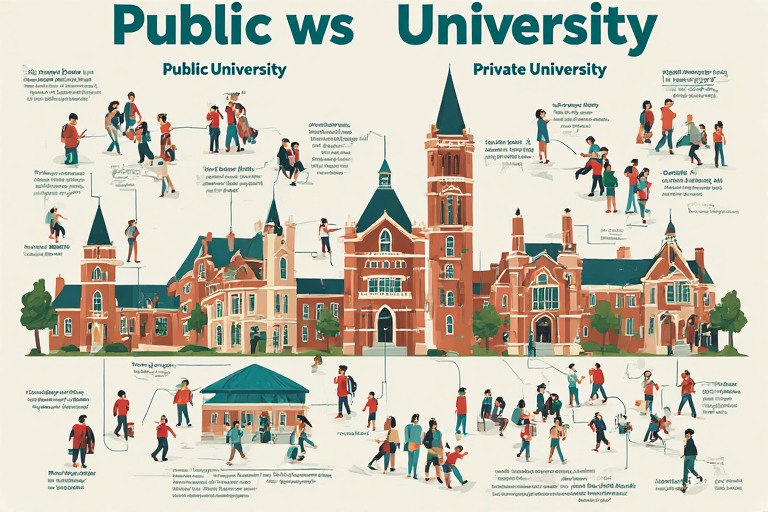
Choosing between a public and a private university is one of the biggest decisions in a student’s academic journey. Both options have strong advantages, but the “better” choice depends on your goals, budget, learning style, and long-term plans.
Understanding Public Universities
Public universities are funded mainly by the government, which often makes them more affordable than private institutions. They usually have larger student populations and a wide range of academic programs.
Key Features of Public Universities:
- Lower tuition fees (especially for in-state or domestic students)
- Larger campuses and student communities
- Wide variety of courses and research opportunities
- Strong focus on academic and research output
Pros:
- Cost-effective education
- High academic credibility and recognition
- Better access to government-funded research programs
Cons:
- Larger class sizes
- Less personalized attention
- Competitive admission process in many cases
Understanding Private Universities
Private universities are funded through tuition fees, donations, and private organizations rather than government funding. They often focus on specialized programs and modern teaching methods.
Key Features of Private Universities:
- Higher tuition fees
- Smaller class sizes
- Flexible and industry-oriented courses
- Modern infrastructure and facilities
Pros:
- More personalized learning experience
- Strong industry connections and placement support
- Innovative and updated curriculum
Cons:
- Expensive tuition fees
- Financial burden without scholarships or aid
- Quality varies widely between institutions
Key Factors to Compare
When deciding between public and private universities, consider the following:
1. Cost and Affordability
If budget is a major concern, public universities are often the more practical choice.
2. Course and Career Goals
Some private universities offer more industry-focused programs, while public universities may excel in research and academic fields.
3. Class Size and Learning Style
If you prefer personal attention and interactive learning, private universities may suit you better. If you are comfortable in large lectures, public universities are a good fit.
4. Campus Life and Networking
Public universities often have larger and more diverse student communities, while private universities may offer more structured networking opportunities with industry professionals.
5. Reputation and Recognition
Both public and private universities can have strong reputations—what matters more is the specific institution and program quality.
Which One Should You Choose?
There is no universal “better” option. The right choice depends on your priorities:
- Choose a public university if you want affordable education, research opportunities, and a traditional academic environment.
- Choose a private university if you prefer personalized attention, modern facilities, and career-oriented programs.
Conclusion
Public and private universities both play an important role in higher education. Instead of focusing only on the type of institution, it is more important to evaluate the quality of the program, faculty, placement opportunities, and overall fit for your personal and career goals. The best university for you is the one that aligns with your ambitions, learning style, and financial situation.