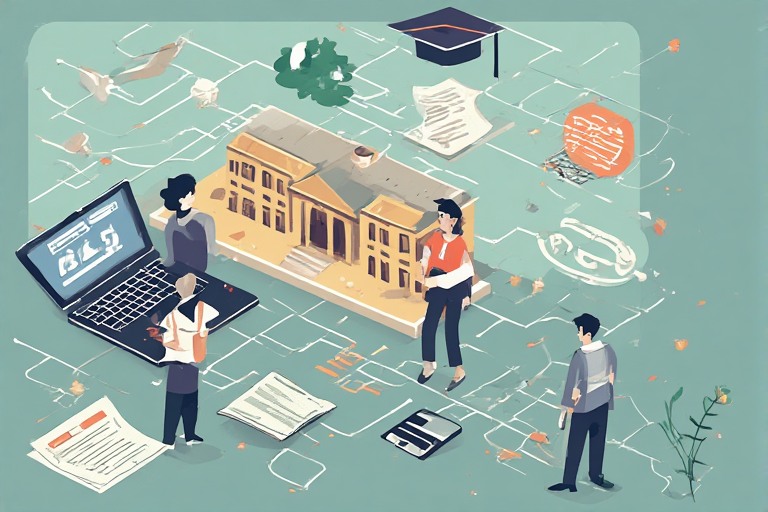
The future of online universities and digital degrees is moving from being an “alternative option” to becoming a mainstream global education system. By 2026 and beyond, digital learning is not just growing—it is reshaping how universities are built, how degrees are delivered, and how employers evaluate talent.
Here’s a clear breakdown of where things are heading:
1. Online Universities Becoming Fully Mainstream
Online and distance universities are no longer secondary institutions. They are becoming central to global higher education.
- Millions of students now study fully online or in hybrid formats
- Many universities operate “digital-first campuses” with virtual classrooms and labs
- Cross-border enrollment is increasing rapidly, allowing students to study anywhere in the world
- Online degrees are increasingly treated the same as campus degrees when properly accredited
In short: the “online vs offline” divide is fading fast.
2. AI-Powered Personalized Learning
Artificial intelligence is transforming how online universities teach.
- AI tutors provide 24/7 academic support
- Courses adapt in real time based on student performance
- Automated feedback helps students learn faster and more efficiently
- Universities are even exploring “self-driving university” systems where AI handles teaching, assessment, and administration
This means future degrees will feel less like fixed courses and more like personalized learning journeys.
3. Rise of Micro-Degrees and Skill-Based Credentials
Traditional 3–4 year degrees are no longer the only path.
- Micro-credentials (short certifications) are growing rapidly
- Universities are breaking degrees into stackable modules
- Employers increasingly value skills + proof of ability over time spent in classrooms
- Digital badges and certificates are becoming part of degree structures
This leads to a future where education is:
“Learn → certify → apply → upgrade continuously”
4. Stronger Role of Accreditation and Trust Systems
As online education expands, trust becomes the biggest factor.
- Digital accreditation systems are becoming essential for legitimacy
- Employers and governments are focusing on verified learning outcomes
- Universities must prove quality, not just deliver content
This ensures that digital degrees remain credible and widely accepted.
5. Virtual Reality (VR) and Immersive Learning
Online education is becoming more practical and hands-on.
- VR labs for science, engineering, and medicine
- Simulations for real-world job training
- Interactive 3D classrooms replacing passive video lectures
This solves one of the biggest old weaknesses of online learning: lack of real-world experience.
6. Employers Increasing Acceptance of Digital Degrees
The job market is also changing its mindset:
- Employers care more about skills, portfolios, and performance
- Remote work has normalized digital collaboration
- Accredited online degrees are widely accepted in most industries
- Degree format (online vs offline) is becoming less important than outcomes
7. Global Access and Education Democratization
One of the biggest impacts:
- Students in rural or developing regions can access top universities online
- Lower cost compared to traditional education
- Lifelong learning becomes normal for career growth
- Education becomes continuous, not one-time
Final Outlook
The future of online universities is not just digital—it is:
- AI-driven
- Skill-based
- Globally accessible
- Flexible and lifelong
- Heavily credentialed and verified
In the coming years, a digital degree from a strong online university will carry the same (or sometimes greater) value than traditional degrees—especially in fast-changing fields like AI, business, and technology.